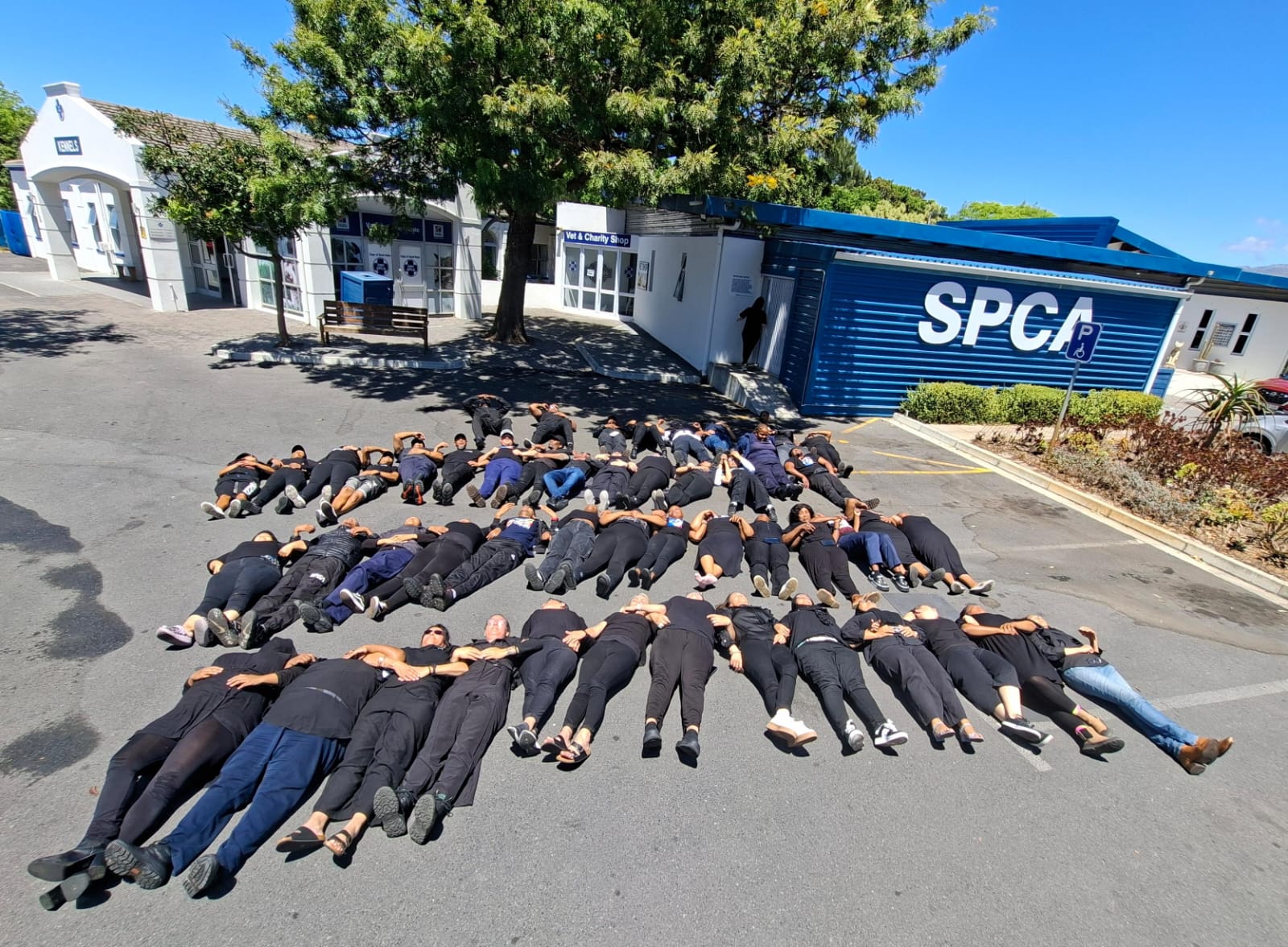
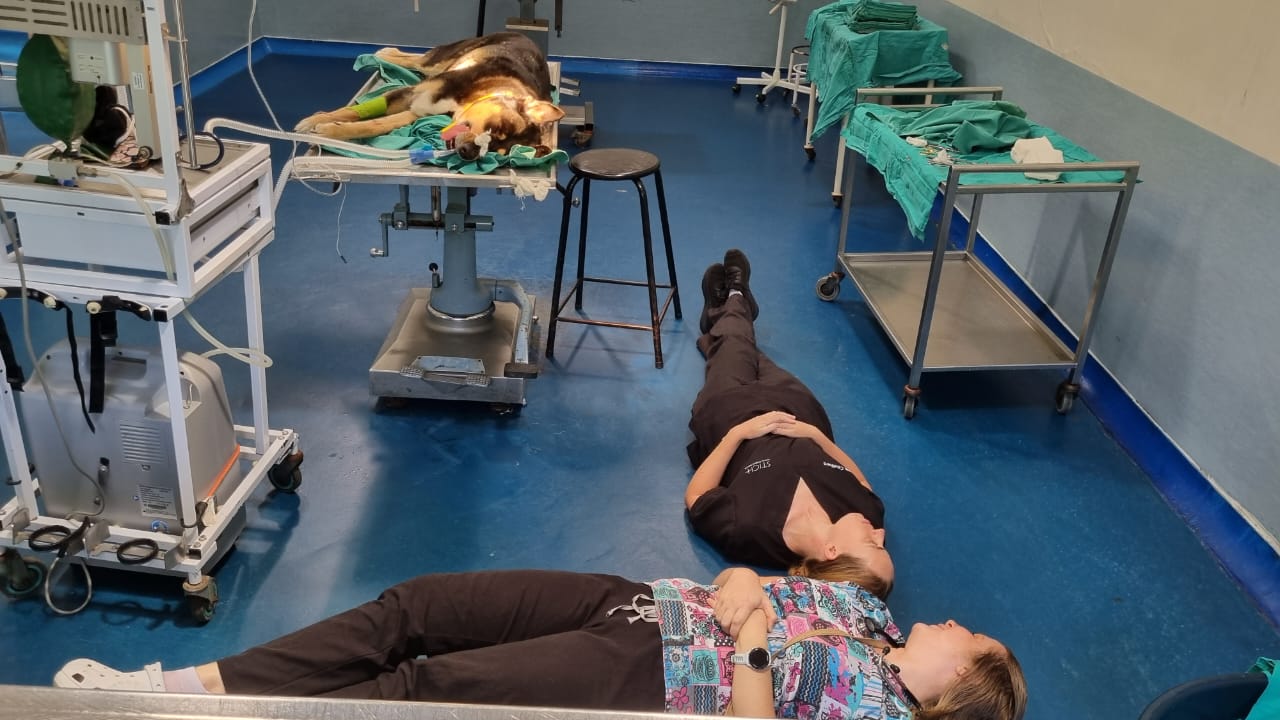
On 21 November, as women and members of the LGBTQIA+ community across South Africa stage a historic shutdown demanding urgent action against gender-based violence (GBV), the Cape of Good Hope SPCA stands in full solidarity.
Domestic violence harms more than just human victims – animals are often silent, unseen casualties. One particularly tragic case involved a survivor who left her abusive partner, only for him to return and set her home alight in retaliation. When she refused to surrender her beloved companion, the family dog, the abuser restrained and brutally stabbed him. The dog, Sametime, was rushed for emergency veterinary care but, despite every effort to save him, did not survive.


This heartbreaking incident highlights a devastating truth: abusers often weaponise the powerful bond between a person and their pet as a tool of coercive control. In these environments, animal cruelty is rarely incidental. It is a calculated tactic designed to instil fear, isolate survivors, and punish those who try to break free.
Animals in violent households are not only witnesses – they are targets. When an abuser harms a companion animal, it is never “just” cruelty. It is an intentional act aimed at destabilising the survivor’s emotional world. Evidence increasingly shows that animals within abusive households are used as a method of control.
Belinda Abraham, spokesperson for the SPCA, says: “The Cape of Good Hope SPCA stands firmly with survivors of gender-based violence. We cannot turn a blind eye to the animals who suffer in these households. Sametime’s story is heartbreaking, but it is also a stark reminder that protecting animals can save lives. Violence against a pet is violence against the people who love them – we are here to support both, people and animals.“
SPCA Staff Joining the Nationwide Call to End GBV
For Sametime. For the woman who loved him. For every home where violence lives.
Research confirms the depth of this link. Dr Sheena Swemmer, Head of Gender Justice at the Centre for Applied Legal Studies (CALS) at the University of the Witwatersrand, notes that studies indicate a strong correlation between domestic violence, child abuse, and the abuse of companion animals. Abusers exploit the emotional bond between people and their pets to manipulate and control their partners.
She explains that strengthening domestic violence laws to explicitly protect companion animals could prevent violence against other victims – whether a child, woman, man, or another animal.
“This may be achieved through including all victims of violence in the home in the protection order, having the perpetrator face criminal sanction for violations of the order, and in developing cross-reporting mechanisms between various departments to help assist in preventing further violence, where violence is detected against one victim.”
Clinical psychologist Daniël den Hollander, former chair of the South African Society of Clinical Psychologists, says:
hurting a partner’s pet is turning the innocent pet into a vessel for the abuse. It is an attempt to control the human heart attached to it.
“There’s a psychopathic quality to this kind of cruelty – it reduces a living creature to an object that doesn’t deserve dignity or respect. The moment someone crosses that line, they’re eroding their own humanity in the process. Pets offer us unconditional comfort, stability, and emotional grounding. When an abuser targets that bond, the message is clear: ‘I can destroy anything you love. Your safety depends on me’. It’s psychological warfare in the form of cruelty.”
He explains that when an abuser harms an animal, he is delivering a proxy threat: “Imagine what I could do to you”.
“Men who use this tactic tend to avoid direct violence in moments where they fear consequences, so they choose the target who cannot fight back or report them.”
Crucially, he notes that animal cruelty inside a violent home is rarely impulsive; it is calculated and designed to erode a survivor’s sense of safety.
“This is classic coercive control. It isolates the survivor, creates fear conditioning, and punishes any source of emotional independence. It is violence with a purpose. Abusers attack the things that give their partner dignity, comfort or autonomy. Pets are often the last refuge when everything else has been stripped away.”
He emphasises that this psychology mirrors the roots of GBV.
“It is the same entitlement, emotional disconnection, and belief that other beings exist to be controlled. We see strong links across animal cruelty, GBV, child abuse, and elder abuse. When someone believes they have the right to dominate, the target doesn’t matter – partner, child, or pet. Violence tends to spread along the path of least resistance and the allure of avoiding consequences through fear. When we protect animals, we are protecting the people who love them. Animal welfare is human welfare.”
He adds that many survivors delay leaving because their pet is their only stable attachment -and because they fear what will happen if they escape.
Animal cruelty, he stresses, is not the collateral damage of GBV but part of its architecture.
“When we speak about shutting down GBV, we cannot forget the silent victims in the home. In an Ubuntu perspective, harming an animal is an act against the whole community. It tells us the home is already unsafe for every living being within it. If the animal is not safe, the human is not safe. This is why the SPCA standing with GBV survivors is not symbolic- it’s essential.”
Criminologist Dr Simon Howell of the University of Cape Town’s Centre for Criminology reinforces this connection:
“One US survey found that in households with substantiated child abuse and neglect, 88 percent also involved animal abuse. In a study of women seeking refuge, 71 % of those with pets reported that their partner had threatened, harmed or killed the animal. Research in the US further highlights that animal cruelty is often a predictive indicator of other violent crimes including intimate partner violence, child abuse and elder abuse. One briefing note summarizes: “Abusive partners often use the bond between victims and their companion animals to control, manipulate, and isolate’.”
He notes that violence against animals is often used to punish, intimidate, or frighten survivors and their children, and that witnessing such cruelty increases the risk of children later perpetrating violence themselves.
He also points out that many legal systems still classify pets as property rather than victims, leaving both animals and human survivors vulnerable.
To strengthen protection for all victims, he argues that law reform should explicitly include companion animals in protection orders.
“Such a change would send a clear message that the animal’s welfare and its role in the household matter to the safety of human victims and is consistent with the Constitution.”
Howell adds that expanding shelters to accommodate pets – or partnering with foster networks – is essential.
“One of the strongest barriers survivors cite elsewhere is the inability to leave because the pet has nowhere safe to go. Developing pet-friendly shelters or partnerships with animal foster care can remove that barrier. Research indicates that many victims delay or avoid leaving their abusers due to concerns for their pets. In practice, domestic-violence shelters should include capacity or referral mechanisms for companion animals; similarly, rental and housing policies should consider the viability of victims retaining pets on relocation.”
Finally, as the SPCA reflects on the profound connection between human and animal safety, Abraham concludes with a message that resonates deeply with the day’s call for national action: “Sametime’s story is a tragic reminder that our work extends beyond the animals we rescue – it reaches into the heart of communities affected by violence. Every act of cruelty toward an animal signals risk to the people who love them. As we stand with survivors this National Women’s Shutdown, we reaffirm our commitment to protecting all vulnerable lives and speaking up for those who cannot.“